
Deck & Fence Staining in South Aurora, Centennial, Parker - Colorado
We clean, brighten, sand and seal gray, splintered wood with penetrating pigmented stain — most 300 to 500 sq ft decks are done in 2 to 3 days, drying time included.
300+ homes painted in Aurora since 2019
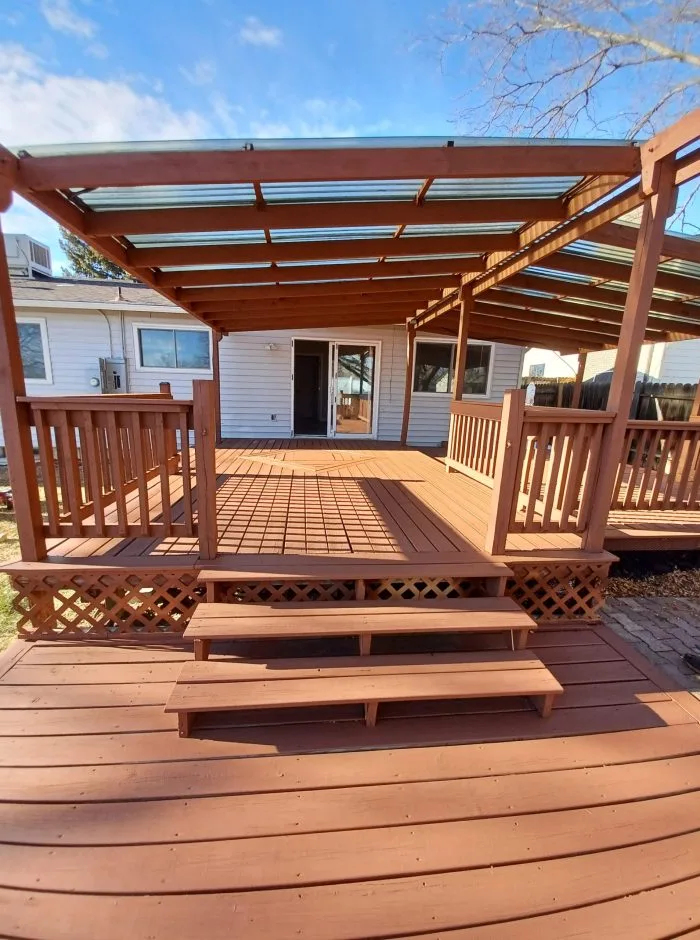
How a deck or fence staining job runs
We assess the wood
Surface graying, raised fiber, split boards and any old film-type finish get checked, plus the sun exposure of the deck.
Clean and brighten
A wood-specific cleaner plus a brightener restores pH and opens the grain, then a controlled-pressure wash and 24 to 48 hours of drying.
Sand and repair
Splintered areas get sanded — handrails first — loose boards are replaced and hardware is tightened.
Stain and cure
Penetrating stain goes on decking, rails, stairs, skirting and both faces of a fence, then cures before furniture comes back.
What deck and fence staining actually includes
Staining starts with cleaning, not with stain. We wash the wood with a product made for wood and follow it with a neutralizer or brightener that brings the pH back and opens the fiber so the stain can penetrate. Then the surface is washed at controlled pressure. Too much pressure, used wrong, raises the grain and ruins the finish before a drop of stain is applied.
After the wash the wood dries 24 to 48 hours. We sand the splintered areas next — railings and handrails first, since those are the surfaces your hands touch. Loose or split boards get replaced and hardware gets tightened; if the board replacement is extensive, we quote that separately so you can see what is carpentry and what is staining.
Before staining we check the moisture in the wood. Then we apply a penetrating pigmented stain — semi-transparent, semi-solid or solid, chosen by how much the wood has weathered — to the decking, railings, stairs and skirting, and to both faces of a fence, saturating edges and joints where water gets in first. Siding, landscaping and the patio are covered while we work.
Timing is honest: a standard 300 to 500 sq ft deck takes 2 to 3 days counting drying, and a residential backyard fence takes 1 to 2 days. Oil-based stains need 24 to 48 hours to dry, and furniture and planters stay off until the stain has cured.
Why it lasts here
Details that decide whether the stain holds in Colorado
High-altitude sun and freeze-thaw cycles are what break wood down along the Front Range. These are the steps that fight them.
Brightener, not just soap
The brightener restores the wood's pH and opens the grain, which is what lets a penetrating stain soak in instead of sitting on top.
Controlled pressure washing
We keep the pressure down on purpose. High pressure used badly lifts the fiber and leaves a fuzzy surface no stain can fix.
Moisture checked first
Wood gets a moisture check before any stain goes on. Staining damp wood is the fastest way to a finish that peels within a season.
Both faces of the fence
Fences are stained on the inside and the outside, plus posts and rails, so one side doesn't gray out while the other looks new.
Stain matched to sun exposure
A south- or west-facing deck takes far more sun than a north-facing one, so the stain type and tone are chosen for your orientation.
Your yard stays protected
Siding, plants and hard surfaces are masked and covered before spraying or brushing starts, and the site is cleaned when we finish.
Who this service is for, and when it isn't the answer
This is for homeowners with wood that has gone gray, splintery or blotchy but is still structurally sound — the deck you stopped walking on barefoot, the backyard fence that faded three shades on the sun side. It is also for owners on a maintenance schedule: in the Denver climate decks need re-staining every 2 to 3 years and fences every 3 to 5.
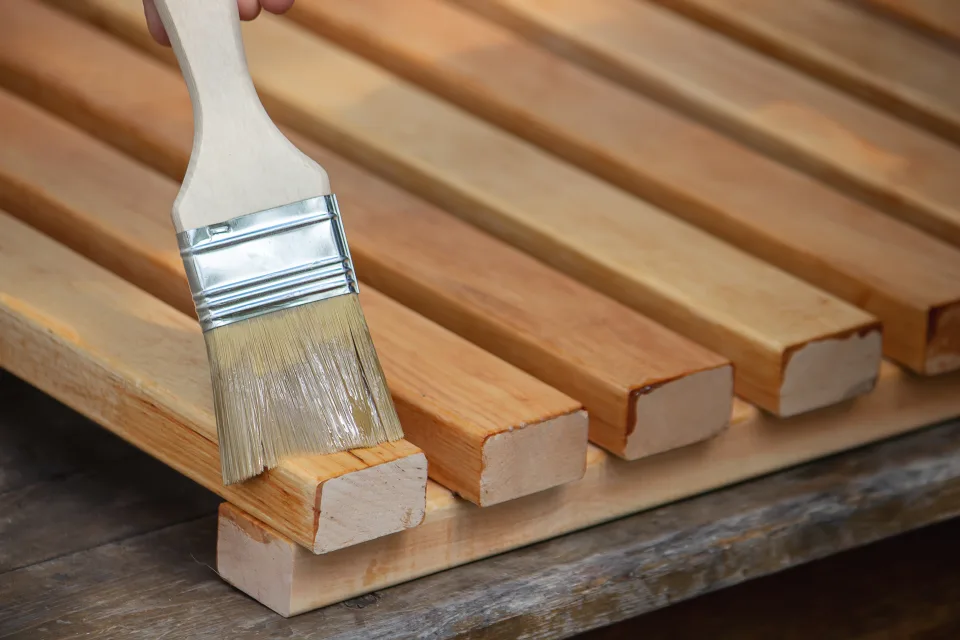
It is not for new deck or fence construction, and it is not a fix for rot that runs through the framing. If we find boards or posts that are past saving during the assessment, we tell you before we start rather than staining over the problem. Extensive board replacement is quoted as its own line so nothing is buried in the price.
Miracles Happen Paint Co & Services is a residential-only company started in Aurora on June 26, 2019 by Maria Sotelo and Samuel Peña. We're licensed and carry a liability insurance certificate you can verify online. We stain decks and fences in Aurora, Centennial, Englewood, Greenwood Village, Parker, Lone Tree, Highlands Ranch, Castle Pines and Castle Rock.
Questions homeowners ask before staining a deck
When can exterior painting be done in Colorado?
Late April through mid-October. The deciding factor isn't the calendar, it's temperature: overnight lows need to stay above 45°F for the paint to cure properly. In midsummer we work the south and west elevations early in the morning, because by midday those surfaces can reach 140°F. April and October are also the best price window, since the market runs 15 to 25 percent higher from May through September.
How much does deck and fence staining cost?
We quote decks by the square foot and fences by the linear foot. The number depends mostly on condition: wood that only needs cleaning, brightening and stain costs less than wood that needs full restoration with sanding and board replacement. Sun exposure and the stain type we recommend also move the price. Send us the dimensions and we'll come measure and give you a written quote.
How much does it cost to paint my house?
Interior runs $2.50 to $6.00 per square foot of surface painted, and exterior runs $3.50 to $6.10. The ranges are wide because price is driven by ceiling height, how much prep is needed and how many colors are involved — not by house size alone. A 2,000 sq ft Aurora interior typically lands between $4,000 and $10,200. We give a free written estimate broken out line by line.
How long does it take to stain a deck?
Two to three days for a standard 300 to 500 sq ft deck, drying time included. A residential backyard fence takes 1 to 2 days. The schedule isn't padded — after cleaning and brightening the wood needs 24 to 48 hours to dry before stain goes on, and oil-based stains need another 24 to 48 hours to dry after application.
Do I need HOA approval before painting?
In Centennial, Parker, Highlands Ranch, Lone Tree, Castle Rock and Castle Pines, almost always yes. Architectural committees usually take 14 to 60 days to respond. We help prepare and submit the color approval request as part of the exterior process, so that review window runs in parallel and doesn't push your start date back.
How often should a deck be re-stained in the Denver area?
Every 2 to 3 years for decks and every 3 to 5 years for fences. High-altitude sun and the freeze-thaw cycle here break down finishes faster than in milder climates, and horizontal deck boards take the worst of it because they hold sun, snow and standing water. Fences dry faster and last longer between coats.
Is it safe to remove my popcorn ceiling?
Only after an asbestos test. Colorado law requires inspection before disturbing building materials no matter what year the building went up, and lab analysis is the only way to know what's in the texture. Testing costs $350 to $500 per material and adds 3 to 5 business days. If the result comes back above threshold, a state-certified abatement contractor must remove it — not a painter.
What's the difference between semi-transparent, semi-solid and solid stain?
They differ in how much pigment they carry and how much grain shows. Semi-transparent shows the most wood grain and suits wood in good shape. Semi-solid hides more weathering while keeping some texture visible. Solid covers the most and is the choice for wood that's heavily grayed or previously coated. We recommend the type after seeing the wood's condition and sun exposure.
Can you paint in winter?
Interiors, yes, all year — and winter is often the best time to do it. There's less wait for a start date and the market prices interior work roughly 10 to 20 percent lower than in peak season. Exterior painting is not recommended from November through March, because overnight temperatures won't stay above 45°F long enough for the coating to cure.
Can you stain over an old finish that's peeling?
We check for that first. Part of the assessment is identifying whether the previous coating was a film-forming finish, because a penetrating stain can't soak into wood that's still sealed. If there's an old film, it has to be cleaned and sanded off in the affected areas before staining, and we'll tell you what that adds to the job before we begin.
Is painting cabinets worth it instead of replacing them?
If the boxes are structurally sound and the layout works, yes. Painting runs $3,500 to $8,500 and takes 5 to 7 working days, while replacing cabinets in Denver metro costs $15,000 to $35,000 and takes weeks. If the boxes are swollen from water damage, or it's peeling melamine or thermofoil, replacement is the honest answer and we'll tell you so.
Do you replace broken deck boards too?
Yes, for loose or split boards and hardware that needs tightening — that's part of prep. If the replacement work is extensive, we quote it separately from the staining so you can see exactly what the carpentry costs. If we find rot in framing or posts during the assessment, we tell you up front instead of staining over it.
How long does exterior paint last here?
Eight to twelve years with premium product and proper preparation. South and west elevations fade and chalk first because of high-altitude UV exposure. On stucco the numbers differ: a standard acrylic lasts 4 to 7 years, while a correctly applied two-coat elastomeric system lasts 8 to 15 years. Most homes reach repaint condition — peeling, chalking or faded color — around the 8 to 12 year mark.
Which cities do you stain decks and fences in?
Aurora is our home base, and we work throughout the south metro: Centennial, Englewood, Greenwood Village, Parker, Lone Tree, Highlands Ranch, Castle Pines and Castle Rock. All of our work is residential — we don't take commercial or office projects. Call (720) 306-9771 any day between 8 a.m. and 8 p.m. to check availability for your address.
How often does a deck need to be re-stained?
Decks every 2 to 3 years, fences every 3 to 5. That's more frequent than milder climates because of over 300 sunny days, high-altitude UV and more than 100 freeze-thaw cycles a year. The simplest signal: when water stops beading on the wood, it's time. New wood in Colorado should be sealed 3 to 6 months after installation, not a year later.
Will the drywall patch be noticeable?
With a spot touch-up, side light will almost always reveal something. The only truly invisible result comes from painting the full wall corner to corner after the patch is textured and primed. We quote both options and you decide. We also seal every patch with primer first, because fresh compound absorbs differently than the old wall and will ghost through otherwise.
Are you licensed and insured, and which cities do you serve?
Yes — the company is licensed and carries a certificate of liability insurance you can verify online through the Next Insurance certificate link. Home base is Aurora, Colorado, and service extends to Centennial, Parker, Englewood, Lone Tree, Highlands Ranch, Castle Rock, Castle Pines and Greenwood Village. All work is residential; we don't take commercial or office projects.